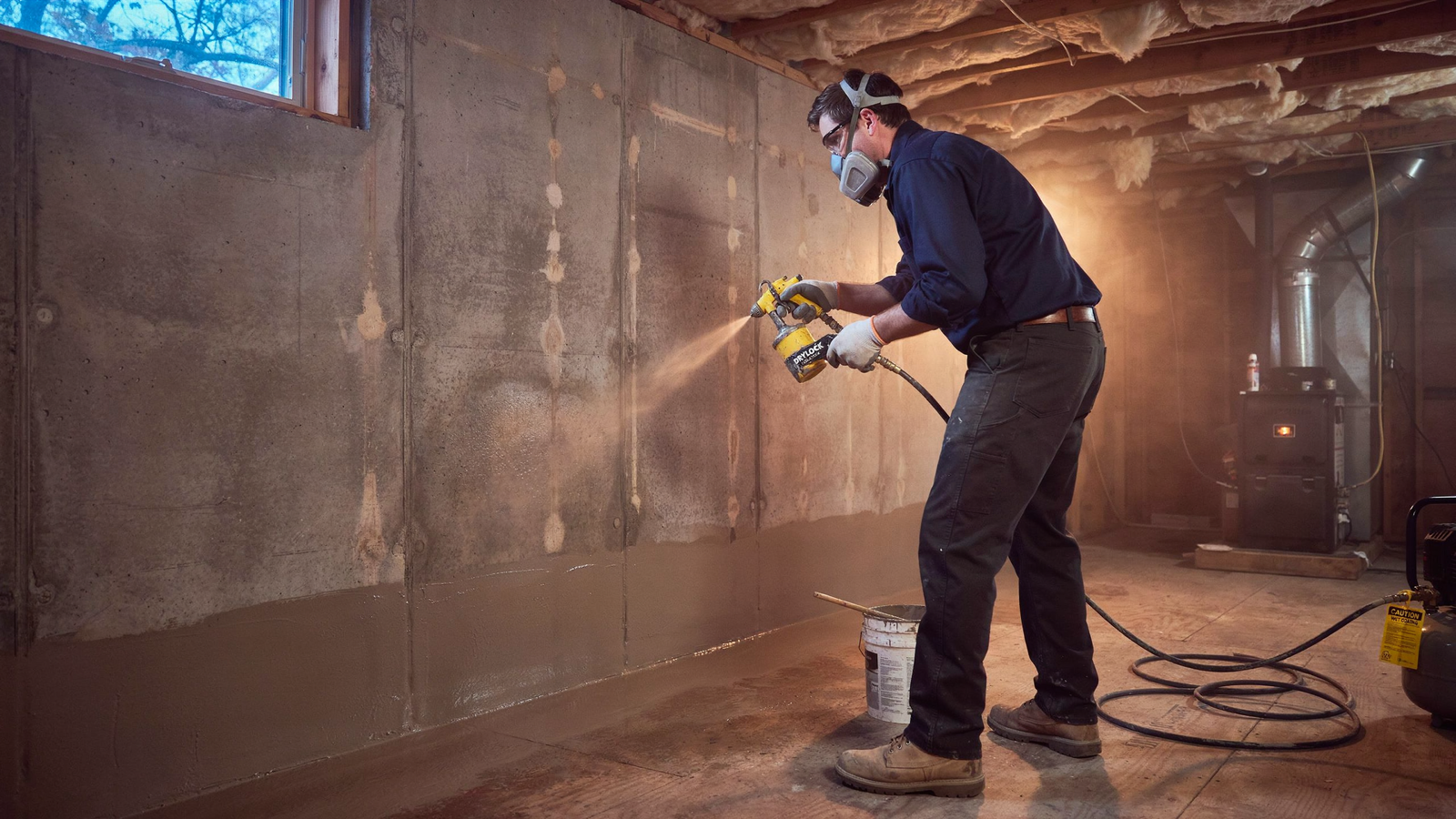
Above-grade rooms deal with rain, humidity, and the occasional plumbing leak. Basements deal with all of that, plus something most homeowners underestimate: hydrostatic pressure. The soil surrounding your foundation holds water after every rain event, and that water pushes inward through any gap or pore in the concrete. Over time, this pressure wins. It always does.
Concrete looks solid, but it’s not watertight. It’s a network of tiny capillaries that wick moisture from the soil directly into your basement. Add in condensation from warm air hitting cool surfaces, and you have a moisture environment unlike anything else in your home. Finishing over that environment without addressing it first is like painting over rust — it looks fine for a while, and then the damage reveals itself at the worst possible time.
This is the consequence homeowners discover last — and regret most. When moisture seeps through your foundation and contacts the paper facing on drywall, the wood framing, or insulation batts, mold spores get exactly what they need to colonize. Because it’s happening inside a closed wall cavity, you don’t see it. You might smell something musty months later, or you might not notice until you’re already dealing with respiratory symptoms.
The EPA is direct on this point: there is no way to effectively clean mold out of porous materials like drywall and insulation. Those materials have to be removed. That means cutting open walls, pulling framing, disposing of contaminated materials properly, treating the foundation, and starting over from scratch. The mold remediation cost alone — before any reconstruction — averages between $1,500 and $9,000 according to Angi, with severe cases in finished basements climbing well past $30,000.
And that figure doesn’t account for what you already spent finishing the space. Every dollar you put into drywall, flooring, cabinetry, and lighting is at risk the moment moisture enters the picture unchecked.
Basement flooring takes the first hit when moisture intrudes. Hardwood swells, buckles, and warps. Laminate delaminates at the seams. Carpet becomes a moisture sponge that’s nearly impossible to dry out completely, creating a perfect breeding ground for mold and bacteria at the fiber level. Even luxury vinyl plank — often marketed as waterproof — fails when water sits underneath it, because the subfloor beneath it degrades.
Replacing basement flooring after water damage is a significant expense on its own. But the bigger issue is that failed flooring usually signals that the moisture problem has already spread to the walls and framing. By the time homeowners call a contractor because their floor is bubbling, the remediation scope has already grown far beyond what anyone anticipated.
Wood framing in contact with persistent moisture doesn’t just grow mold — it rots. Rot is structural. A compromised floor joist or a rotted sole plate doesn’t just create a cosmetic problem; it undermines the integrity of the space above it. In cases where moisture intrusion has been ignored for years inside a finished basement, structural repairs become a necessary part of any remediation project.
Beyond the framing, chronic water infiltration accelerates the deterioration of your foundation itself. Efflorescence — the white chalky mineral deposit that forms on basement walls — is a visible sign that water is moving through your concrete regularly. Left unaddressed, that movement widens cracks and weakens the wall over time. What begins as a minor seepage issue becomes a foundation repair problem that costs far more than any waterproofing system ever would have.
This isn’t about scare tactics. It’s about what the science actually says. The Centers for Disease Control and Prevention links mold exposure to upper respiratory symptoms, asthma attacks, throat irritation, and skin reactions — particularly in children, the elderly, and anyone with existing respiratory conditions. When mold grows inside a finished basement, the HVAC system in that space circulates those spores throughout the entire house.
A finished basement is often where families spend significant time — watching movies, playing games, hosting guests, or housing a family member in an in-law suite. The air quality in that space directly affects everyone in the home. Choosing to skip waterproofing isn’t just a financial risk. It’s a health risk for the people living under your roof.
Here’s the math that should stop anyone from cutting corners. A proper basement waterproofing system — interior drainage, a sump pump, and wall encapsulation — typically runs between $5,000 and $15,000 depending on the scope and the size of the space. That number feels significant when you’re budgeting a remodel.
Now consider the alternative. According to Forbes Home, water damage restoration in a finished basement averages $3,000 to $12,000 just for the mitigation work — not including reconstruction. Add mold remediation, replacement flooring, new drywall, and rebuilt framing, and you’re looking at a project that costs significantly more than the original remodel did. Many homeowners who take this path end up spending twice what they would have spent doing it right the first time, and they lose years of use out of the space while the damage compounds.
Waterproofing before a basement remodel isn’t one single product — it’s a system. It starts with a thorough moisture assessment: checking for active seepage points, testing humidity levels, identifying where water enters during rain events, and evaluating the current drainage situation around the foundation exterior.
From there, the right combination of solutions gets applied: crack injection to seal active leaks, interior drain tile systems to manage hydrostatic pressure, a quality sump pump with battery backup, and wall vapor barriers that channel any moisture that does penetrate the concrete down to the drain system rather than into your finished materials. Some situations also call for exterior grading corrections or downspout extensions to redirect surface water away from the foundation.
Once all of that is in place and verified dry, the finish work begins. That’s the correct sequence. Anything else is building on an unstable foundation — literally.
Lake County, Illinois has specific soil and climate conditions that make basement moisture management more demanding than in drier regions. The area sits on clay-heavy soil that doesn’t drain well, meaning water pools around foundations longer after heavy rains. The freeze-thaw cycles that run through Illinois winters also stress foundation walls repeatedly, opening new crack pathways every season.
Communities along the North Shore — including Lincolnshire, Vernon Hills, Buffalo Grove, and Deerfield — also sit in a region that receives consistent precipitation throughout the year. A basement that seems dry in July can show significant seepage by April. Waterproofing in this climate isn’t a luxury option. It’s a baseline requirement for any basement that’s going to be finished and used as living space.
At EZ Basement Remodeling, every project starts with an honest assessment of the space before any finish work is discussed. We’ve seen what happens when moisture is ignored — the torn-out walls, the failed floors, the remediation bills — and we won’t put our name on a project that’s headed toward that outcome.
Our team handles both the waterproofing phase and the finish work under one roof, which means the coordination is seamless and the accountability is clear. There’s no finger-pointing between a waterproofing contractor and a finishing contractor if something goes wrong. We manage the project from moisture assessment through final installation, and we price it transparently so homeowners know exactly what they’re getting and why.
If you’re in Lincolnshire or anywhere in Lake County and you’re thinking about finishing your basement, come to us before you make any decisions about sequencing or budget. We’ll tell you honestly what your basement needs, what it doesn’t, and what the right order of operations looks like for your specific space.